AC Repair Chilliwack: Central AC Not Cooling in a Heat Wave
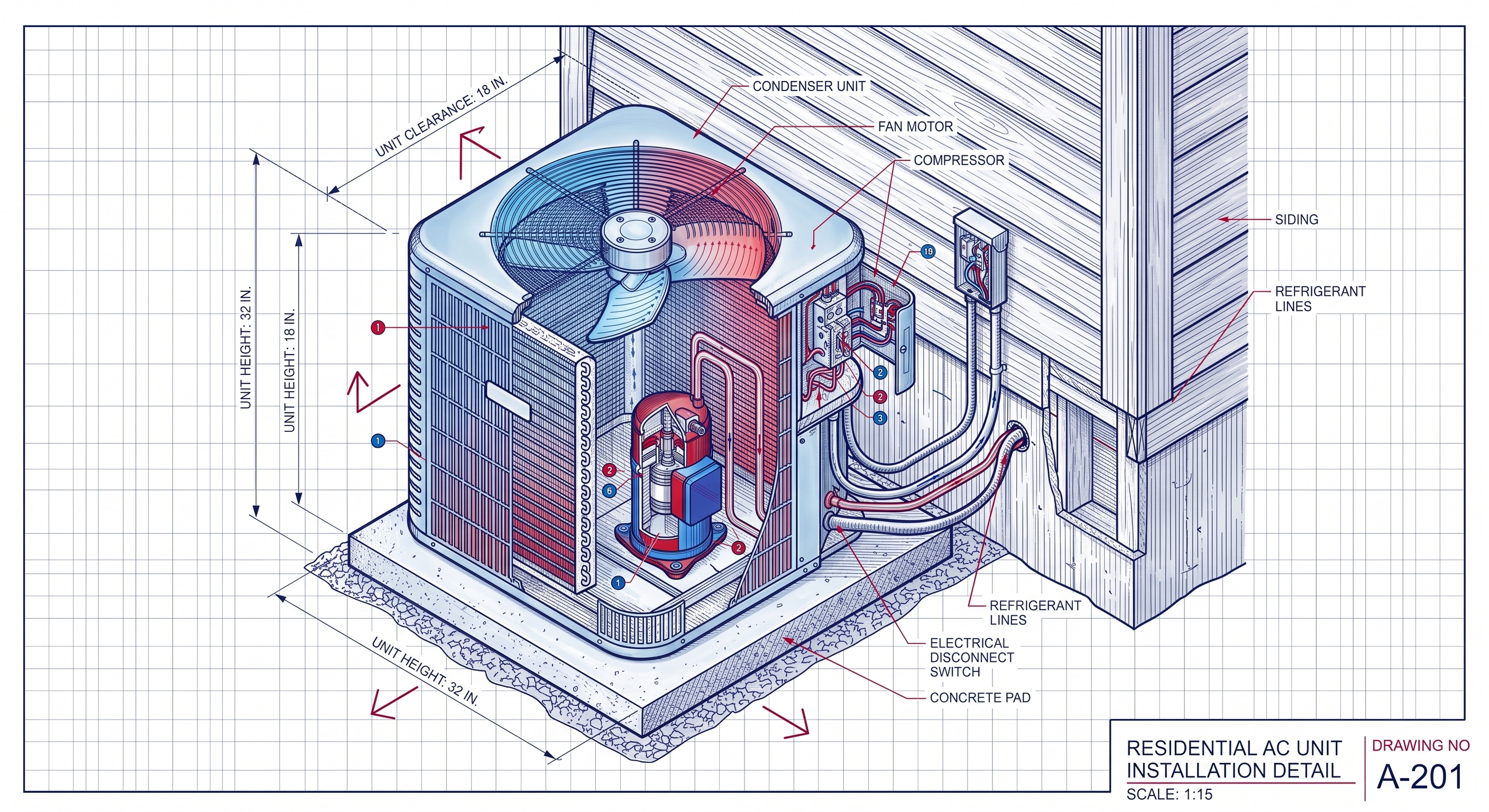
It is 33 degrees outside, the air conditioner has been running since breakfast, and the vents are pushing air that feels barely cooler than the hallway. Before you search for AC repair in Chilliwack and brace for a bill, run five checks: thermostat, filter, breaker, outdoor unit, and ice on the refrigerant lines. Each one is safe to do yourself, takes a few minutes, and clears up a real share of the no-cool calls that come in during every Fraser Valley heat wave. Alpine Refrigeration has kept cooling and refrigeration equipment running here since 1969. This is the triage worth doing before anyone rolls a truck.
Five safe checks before you call for AC repair
Work through these in order. None of them involves opening a panel or touching wiring.
- Thermostat. Confirm it is set to cool, the setpoint is below the current room temperature, and the fan is set to auto. A fan set to on blows unconditioned air between cooling cycles, which feels exactly like an AC blowing warm air. If the screen is blank or unresponsive, replace the batteries.
- Filter. Pull the filter and hold it up to a light. If light barely passes through, airflow is choked and the system cannot move enough air to cool the house. Swap it and give the system an hour. Filters load up faster in smoke season than the packaging suggests.
- Breaker and switches. Check the electrical panel for a tripped breaker, the outdoor disconnect box near the condenser, and the furnace switch that looks like an ordinary light switch. Reset a tripped breaker once. If it trips again, leave it off and call. Repeated trips point to an electrical fault that needs a licensed technician.
- Outdoor unit. The condenser has to breathe. Clear leaves, grass clippings, and fluff off the coil fins and make sure nothing is stacked against the cabinet. Then confirm the top fan actually spins when the thermostat calls for cooling. A silent outdoor unit while indoor air keeps blowing is a strong clue for the technician.
- Ice on the lines. Look at the copper lines where they enter the outdoor unit. Frost or ice there, or on the indoor coil if you can see it, means the system is starving for airflow or losing refrigerant. Switch cooling off, run the fan only, and let it thaw. Running a frozen system can damage the compressor, the most expensive part in the box.
If the house starts cooling after any of these, you are done. If not, the next section explains what the symptom usually means.
What it means when your air conditioner is blowing warm air
Warm air at the vents almost always traces back to one of four causes.
The indoor fan is running but the outdoor unit is not. You hear air moving inside and silence outside. A failed capacitor is a frequent culprit here, a small part that dies often in extreme heat and is a quick fix for a technician.
The coil froze from poor airflow. A clogged filter or a blocked return starves the coil until it ices over, and the ice then blocks what little airflow was left. Thaw it as described above and restart with a fresh filter.
The system is low on refrigerant. Cooling that fades over days rather than quitting all at once suggests a leak. Refrigerant is a licensed trade item in Canada, not a DIY top-up, and a leak needs to be found and repaired, not just refilled.
The compressor itself has failed. The outdoor fan spins but the unit hums, clicks, or trips the breaker. That is a stop-and-call situation, and on an older system it opens the repair or replace question below.
DIY stops at the panel. Anything electrical beyond a single breaker reset, anything refrigerant, and anything inside the cabinet belongs to a licensed tech.
Repair or replace: how to decide when the system is down
No single number decides this. Three things together do: the age of the system, the part that failed, and the refrigerant it runs on.
Most central air conditioners and heat pumps installed in the Fraser Valley over the past two decades run on R-410A. Under the federal regulations implementing the Kigali Amendment, Canada is phasing down HFC refrigerant supply by 85 percent by 2036. The rules target the supply entering the country, not the equipment already in your house, and Environment and Climate Change Canada has been explicit that Canadians can keep using what they own.
The practical effect shows up in repair quotes. New residential equipment sold in Canada has moved to lower GWP refrigerants, mainly R-32 and R-454B, while R-410A, with a global warming potential of 2,088, gets scarcer and more expensive with each supply step-down.
So here is the honest frame. A system under ten years old with a failed capacitor or fan motor is a repair, almost every time. A system in its second decade with a compressor failure or a refrigerant leak deserves two quotes side by side: the repair and the replacement. Repair money on an old R-410A unit may be buying months, not years. A technician who has opened the cabinet can tell you which.
Cooling a house when wildfire smoke keeps the windows shut
August in the Fraser Valley often stacks smoke on top of heat. When the air quality index climbs, the usual trick of flushing the house with cool night air is off the table, and the AC carries the entire load around the clock. That constant duty is precisely when a marginal system folds.
Help it out. Close blinds on sun-facing windows through the afternoon. Push heat-producing jobs like laundry and oven cooking to late evening. Hold one steady setpoint instead of swinging the thermostat, since deep swings force long recovery runs.
Filters matter double in smoke season. We covered which filters actually handle wildfire smoke, and what MERV ratings mean, in our guide to HVAC filters for wildfire smoke, so start there rather than guessing at the hardware store.
When it becomes an emergency AC repair call
Heat is a safety issue before it is a comfort issue. The BC Coroners Service reviewed the 2021 heat dome and confirmed 619 heat related deaths in a single week, most of them older adults indoors in homes without adequate cooling. If someone in your house is elderly, pregnant, an infant, or managing a chronic condition and indoor temperatures keep climbing, treat a dead AC as urgent. Get them somewhere cool first, a basement, a library, an air conditioned relative’s place, then arrange the repair.
Two symptoms mean shut the system down and call regardless of who is home: an electrical burning smell from the furnace or air handler, and a breaker that will not stay reset.
When you call, have three things ready. A photo of the data plate on the outdoor unit, which carries the model and serial numbers. A list of what you already checked. A plain description of what the system does when you turn it on. Those details let a dispatcher triage accurately and send the truck with the right parts on it.
Run the checks, then get a quote
Thermostat, filter, breaker, outdoor unit, ice. Ten minutes, no tools, no risk. If the house is still warm after that, the problem is real and worth a professional diagnosis rather than another hour of hoping.
Alpine Refrigeration has serviced heating and cooling equipment across Chilliwack, Abbotsford, Langley, and the wider Fraser Valley since 1969. Tell us what you found during the checks and request a quote for AC repair through our air conditioning service page or our contact page. And if this is the second summer in a row the system has quit, our maintenance packages exist to catch these failures in May instead of August. No pressure, no upsell, just a straight answer on what the fix costs and whether it is worth making.
Frequently Asked Questions
Why is my AC running but not cooling?
Start with airflow and settings. A clogged filter, a thermostat set to fan on, or a frozen indoor coil each produce this exact symptom. If those check out, low refrigerant from a leak or a failed outdoor unit component is likely, and both need a licensed technician to diagnose and repair.
Why is my air conditioner blowing warm air?
Check the thermostat first: a fan set to on blows room temperature air between cooling cycles. Beyond that, warm air usually means the outdoor unit is not running, often a failed capacitor, or the system has lost refrigerant through a leak. Both are technician repairs, not DIY jobs.
Should I turn off my AC if the lines are frozen?
Yes. Switch cooling off and run the fan only so warm return air thaws the coil, usually within a few hours. Replace the filter before restarting. Running a frozen system strains the compressor, the most expensive component to replace, and the ice often hides the airflow problem that caused it.
Is an R-410A air conditioner still worth repairing?
Usually yes. Federal rules restrict new HFC supply, not equipment you already own, so an R-410A system can be serviced and recharged normally. Minor repairs on a younger system make clear sense. For a major failure on a system in its second decade, compare a repair quote against a replacement quote.
What counts as an air conditioning emergency?
Rising indoor heat with an elderly person, infant, pregnant person, or someone with a chronic condition in the home is an emergency: move them somewhere cool, then call. An electrical burning smell or a breaker that will not stay reset also means shut the system down and call right away.