Wildfire Smoke and Your HVAC: Filter Upgrades That Actually Work in the Fraser Valley (2026 Guide)
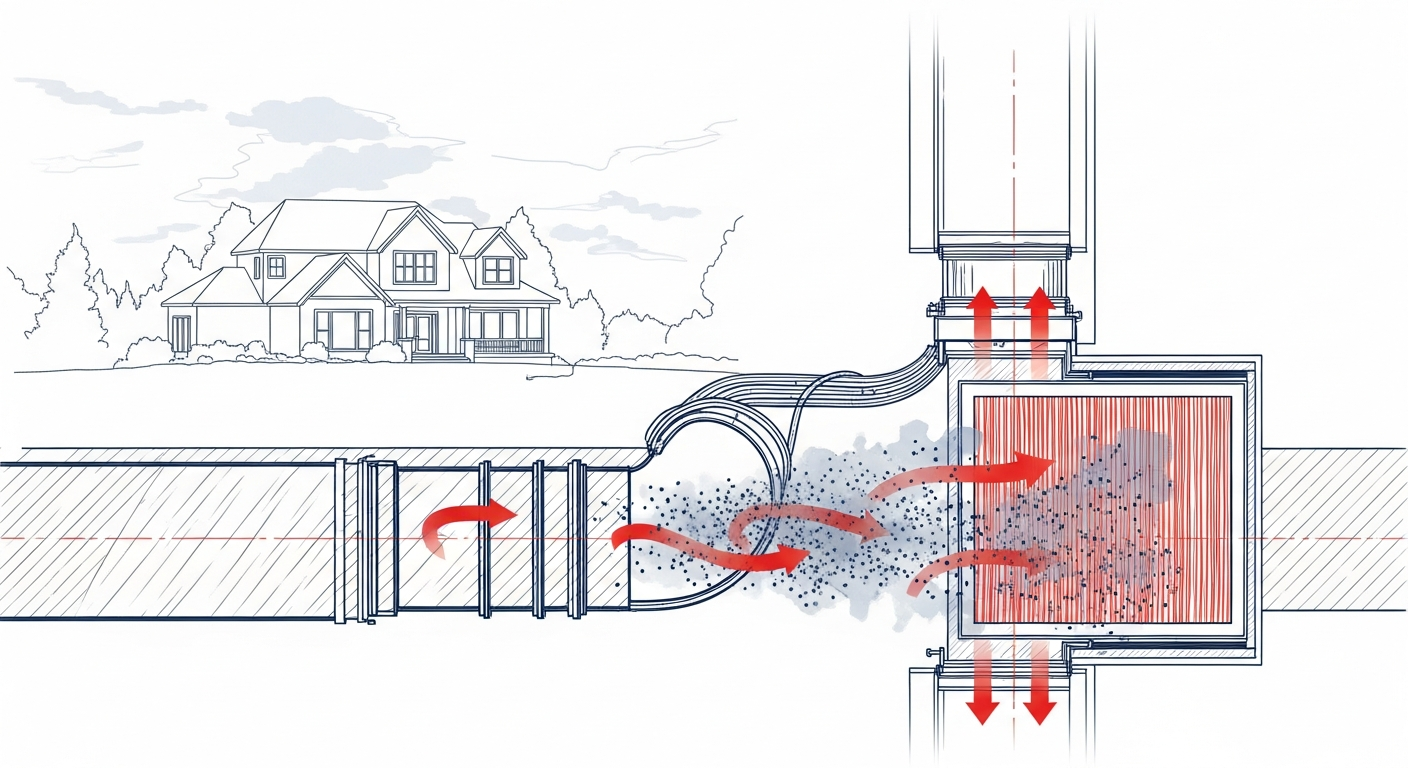
The sky over Abbotsford turns that strange orange grey, your kid coughs in the next room, and you pull the filter out of the furnace and find a thin white pad that looks like it came in a cereal box. That’s the moment most Fraser Valley homeowners realize their HVAC setup wasn’t built for wildfire smoke. The good news: the fix is usually cheap, fast, and doesn’t involve replacing your furnace.
This guide walks Fraser Valley homeowners through what actually works against wildfire smoke in 2026: the right filter, the right settings, and the second layer of defence for the room your family sleeps in. We’ll also flag the spots where higher numbers can do more harm than good, and when a phone call to an HVAC tech is the smarter move.
Quick Fact
For most Fraser Valley homes, a MERV 13 furnace filter, your HVAC fan set to recirculate, and a portable HEPA air cleaner in the bedroom is the working setup. That combination handles the fine particles in wildfire smoke without overloading your equipment.
Why Your Furnace Filter Is Your First Line of Defense
Your forced-air furnace or heat pump is already doing something useful every time it runs. It pulls air from your living space, moves it across the heat exchanger or coil, and pushes it back out through the vents. Every pass goes through the filter slot first. That filter is the cheapest, most effective piece of indoor air quality equipment in your home - and most homeowners are running the wrong one.
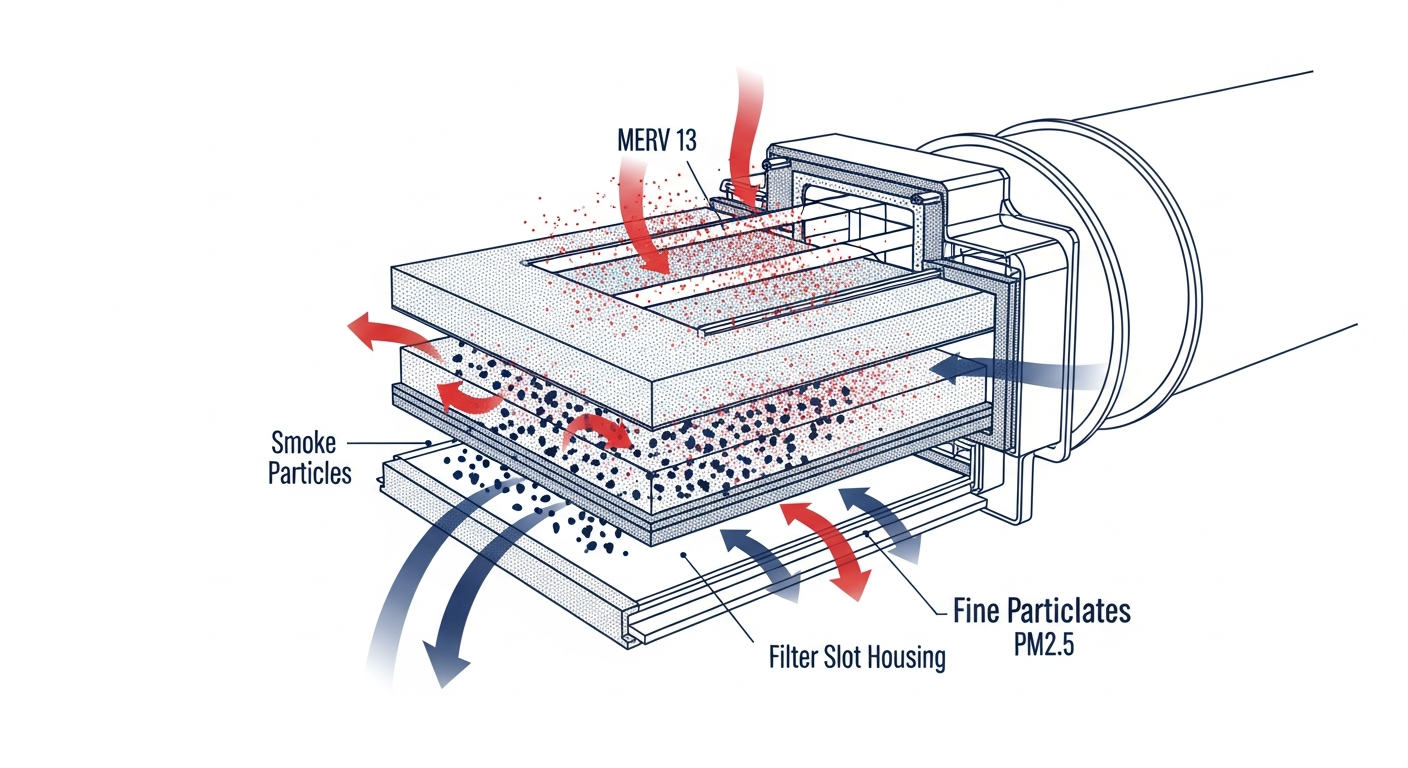
A standard one-inch fiberglass pad rated MERV 4 catches lint and large dust. It does almost nothing against wildfire smoke. The particles in smoke that matter most for your health are called PM2.5, which means they’re smaller than 2.5 micrometers across. They slip right through low-rated filters, ride the airflow back into your living space, and end up in your lungs.
A better filter in the slot you already have is the simplest upgrade you can make, and it works whether you have a furnace or heat pump, or a central air conditioner. Same slot, same fan, different media.
What MERV Actually Means
MERV stands for Minimum Efficiency Reporting Value. It’s a scale from 1 to 16 (with extended HEPA ratings going higher) that measures how well a filter captures particles of different sizes. Higher numbers catch smaller particles. Lower numbers catch only the big stuff.
For wildfire smoke specifically, the U.S. Environmental Protection Agency and ASHRAE both recommend MERV 13 as the minimum effective rating. During smoky periods, upgrading to an HVAC filter rated MERV 13 or higher is recommended to effectively remove fine particle pollution from smoke in the indoor air.
MERV Rating
What It Catches
Effective Against Wildfire Smoke?
MERV 1–4
Lint, large dust, pollen
No
MERV 8
Mold spores, household dust, pet dander
Barely
MERV 11
Finer dust, some smoke particles
Partial
MERV 13
PM2.5, smoke, bacteria, virus carriers
Yes - recommended minimum
MERV 14–16
Smaller particles still
Yes, if your system can handle it
MERV 13 is the sweet spot most furnaces and air handlers can run without trouble. It captures the fine particles in wildfire smoke while still letting your system move enough air to heat and cool your house properly.
Why Higher Isn’t Always Better
A common instinct when you’re worried about smoke is to grab the highest MERV filter at the hardware store. That can actually make things worse. Denser filter media creates more resistance to airflow - what engineers call pressure drop. Too much pressure drop and your blower works harder, your equipment cycles oddly, and in extreme cases you can damage components.
Symptoms of a system fighting too much filter:
- The furnace short cycles, turning on and off every few minutes
- The AC coil ices up in summer
- The blower motor gets hot or noisy
- Rooms farther from the furnace stop getting proper airflow
- Utility bills creep up because the system runs longer to do less
Older Fraser Valley homes are especially vulnerable. A 1970s farmhouse near Yarrow with original ductwork and a builder-grade blower wasn’t designed for high-efficiency filtration. Newer builds in Garrison Crossing or central Abbotsford usually handle MERV 13 without issue, but it’s worth checking the manual or asking a tech before you jump to MERV 14 or higher.
A safer path if your system struggles with MERV 13: upgrade to a four-inch deep-pleat filter cabinet. The deeper media gives you high capture efficiency with much less pressure drop, because the filter has more surface area to work with. Retrofitting a four-inch cabinet onto an existing furnace is straightforward work for an HVAC tech and pays back fast in airflow and filter lifespan.
A Second Layer for the Bedroom: Portable HEPA
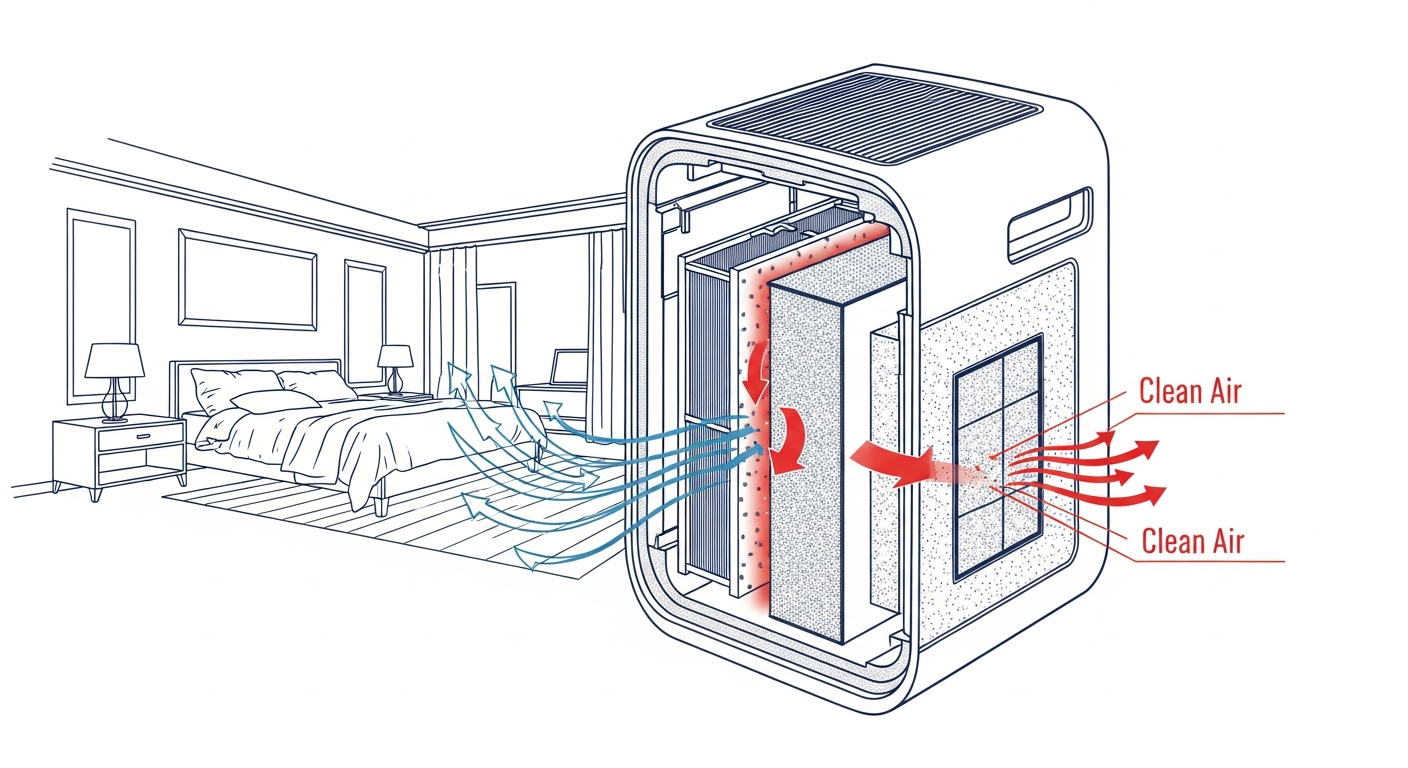
Your furnace filter does whole-home filtration, but it only works when the fan is running. Even with the fan set to “on” continuously, the air in your bedroom on a smoky night isn’t getting cleaned as fast as you’d want it to be. That’s where a portable HEPA air cleaner earns its space.
HEPA filters are denser than anything that fits in a residential furnace slot. They capture roughly 99.97% of particles down to 0.3 microns, putting them above MERV 16 in equivalent rating. They’re meant for room-by-room use, not whole-home work.
For Fraser Valley homes, the right placement is the bedroom of whoever is most affected by smoke - that usually means kids’ rooms first, then the primary bedroom. An air cleaner running on its highest setting next to your bed for eight hours of sleep does more for your health than the same unit running all day in a living room.
Sizing matters. Look for a unit with a Clean Air Delivery Rate (CADR) for smoke that’s at least two-thirds of your room’s square footage. A 12 by 12 foot bedroom (144 sq ft) wants a smoke CADR of about 100 or higher. Most reputable units list this number on the box.
What to Do When the AQHI Spikes
The Fraser Valley Regional District and Metro Vancouver issue air quality warnings when wildfire smoke pushes fine particulate matter above health thresholds. When you see the Air Quality Health Index (AQHI) climb above 7 (high risk) for your area, here’s the active-event checklist:
- Close windows and seal obvious gaps. Weatherstripping on doors, a rolled towel along a sliding door track. You’re trying to reduce how much outdoor air infiltrates the house.
- Set the HVAC to recirculate. If your system has a fresh-air intake or makeup-air damper, close it. You want the air inside cycling through your upgraded filter, not new smoky air coming in.
- Run the fan continuously. Switch your thermostat from “auto” to “on” so the blower keeps moving air through the filter even when the system isn’t actively heating or cooling.
- Check the filter at the start of the event, then weekly. Heavy smoke loads a MERV 13 fast. During heavy smoke, plan to replace the filter more often than the manufacturer recommends.
- Run the bedroom HEPA at night. Highest fan setting you can sleep with.
- Monitor FVRD and Fraser Health AQHI alerts. The province publishes real-time air quality data for 22 BC communities, including Central Fraser Valley and Eastern Fraser Valley.
- Air out the house when smoke clears. Open windows or the fresh-air intake briefly when the AQHI drops back to low risk. Trapped indoor pollutants build up over multi-day events.
When to Call an HVAC Pro
A filter upgrade is a homeowner-level job. Most of the rest of this guide is too. There are a few spots, though, where a phone call to an HVAC tech is the smarter move:
- Your system can’t handle MERV 13 safely. If you’re seeing short cycling, frozen coils, or weak airflow after a filter upgrade, you may need a four-inch filter cabinet retrofit or a system tune-up rather than a different filter.
- Your ductwork leaks. Leaky return ducts pull air from your attic, crawlspace, or rim joist into the system, so smoky air can enter even with the fresh-air damper closed. Duct sealing is a worthwhile investment for older Fraser Valley homes.
- You’re considering a whole-home air cleaner. Electronic or media air cleaners in the return plenum are a step up from a slot filter for households with respiratory conditions, but they need to be sized to the system properly.
- Your furnace or air handler is over 15 years old. Older equipment has lower static-pressure tolerance. A tech can tell you what your system can safely handle before you push to a higher MERV rating.
Alpine Refrigeration has been doing HVAC work across the Fraser Valley since 1969, covering Chilliwack, Abbotsford, Mission, Aldergrove, and surrounding communities. We see the same patterns every smoke season: homeowners running fiberglass pads in 30-year-old furnaces, sealed-up new builds with no fresh-air strategy, leaky ductwork pulling attic air into living spaces. Most of these problems have straightforward fixes. Send us a message and we’ll tell you exactly what your system can handle.
Pulling It Together
Wildfire smoke is an annual reality for the Fraser Valley now. The 2025 fire season brought multiple AQHI warnings across Chilliwack, Abbotsford, Mission, and surrounding communities, with smoke arriving from fires near Hope, Whistler, the Cariboo, and across the U.S. border. The homeowners who handled it best weren’t the ones with the most expensive equipment - they were the ones who understood their existing system and made a few targeted upgrades before smoke season started.
The core setup is simple: MERV 13 in the furnace slot, fan on continuous during smoke events, and a HEPA air cleaner in the bedroom. If you’re unsure whether your furnace or heat pump can handle a MERV 13 safely, that’s exactly the kind of question a quick service call answers. We’re available across the Fraser Valley year-round, including emergency service for equipment issues that come up mid-event.
Ready to upgrade before the next smoke event? Request a quote online or call Alpine Refrigeration at 604.795.5777 to talk through your filter setup and indoor air quality options.
Frequently Asked Questions
Can I just put a HEPA filter in my furnace?
No. True HEPA filters are too dense for residential furnace blowers. They create enough pressure drop to damage your equipment or starve your system of airflow. Use HEPA in portable air cleaners, and use MERV 13 in your furnace slot.
How often should I replace a MERV 13 filter during smoke season?
Inspect at the start of any smoke event and replace more often than the manufacturer recommends. In a heavy season, that can mean every 30 to 45 days instead of the typical three months. If the filter looks grey or dark when you check it, replace it.
Does running the air conditioner help filter smoke?
The AC itself doesn’t filter air, but the same blower moves air through the same filter slot whether you’re heating, cooling, or just running the fan. The key is keeping the fan running (“on” rather than “auto”) so the filter keeps working between heating or cooling cycles.
Is MERV 16 better than MERV 13 for smoke?
MERV 16 captures smaller particles, but the extra pressure drop is only safe if your system was designed for it. For most Fraser Valley homes, MERV 13 in a one-inch slot or a four-inch deep-pleat cabinet is the practical maximum without modifications.
What if I have a heat pump instead of a furnace?
Same playbook. Heat pumps use the same return-air filter slot as a furnace, and the MERV 13 recommendation applies identically. If your heat pump is paired with an air handler in a closet or attic, check the unit’s static pressure rating before going higher than MERV 13.
Are DIY box-fan filters worth building?
Yes, as a supplement. EPA research has shown that DIY air cleaners can be a cost-effective approach to improving indoor air quality during wildfire smoke events. A box fan with a MERV 13 filter taped to the back isn’t a replacement for proper HVAC filtration, but it can add useful capacity in a single room.
Does sealing my house make indoor air quality worse?
A tighter house keeps smoky outdoor air out, but it also traps indoor pollutants from cooking, cleaning, and off-gassing. The fix is filtration plus controlled ventilation: run your upgraded furnace filter and a HEPA air cleaner during smoke events, then air out the house briefly when AQHI improves.